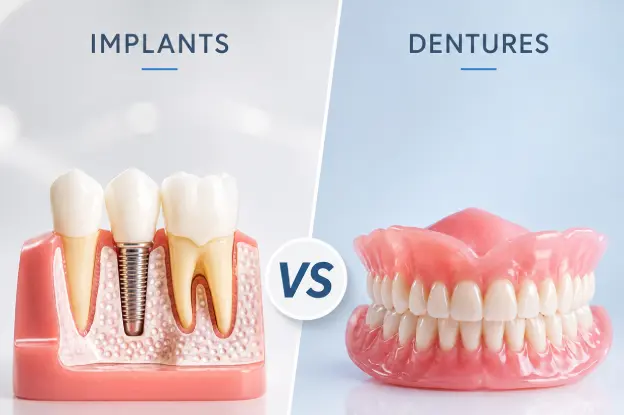
If you are missing teeth, it is normal to feel stuck between two common options: dental implants and dentures. Many people start searching for dental implants in Kenilworth because they want something that feels secure, looks natural, and supports day-to-day comfort.
The good news is that there is rarely a single "right" answer for everyone. The best choice is usually the one that matches your health, priorities, and how you want your smile to function.
If you want the shortest path to clarity, focus on stability, daily comfort, and the level of maintenance you are comfortable with. Then confirm candidacy with an exam and imaging.
In our previous blog, "Everything You Need to Know About Dental Emergencies and Implants", we covered how implants can restore function after tooth loss. In this article, we focus on the decision-making side: how patients compare implants and dentures in the real world.
Before comparing details, get clear on one preference: do you want teeth that stay in place (fixed), or are you comfortable removing them to clean (removable)? This single decision often narrows the field.
Many fixed tooth replacement plans use implants as the foundation. You can read an overview on our dental implants page.
Removable dentures are designed to come out for cleaning. If you are exploring a removable solution, our dentures page explains complete and partial options.
Dental implants are commonly chosen when stability is the top priority. For many patients, the most meaningful difference is how confident they feel chewing and speaking without worrying about movement.
Experience note from our team: in consultations, patients often mention cost first, but after we talk through day-to-day life, confidence that the teeth will not move becomes the deciding factor more often than people expect.
Dentures can be a practical way to restore a smile and support everyday function, especially when you prefer a removable plan or want to avoid surgical treatment. They can also be a starting point in a longer-term plan, depending on your goals and oral health.
Some patients want the convenience of replacing many teeth but do not want to deal with a denture that shifts. That is where implant-supported dentures and full-arch approaches can come into the conversation.
If you are also considering other tooth replacement designs, our crowns and bridges page provides a helpful overview of how restorations can be used to rebuild smiles.
Sometimes the decision is not only "implants vs dentures," but also what needs to happen first. If a tooth is severely damaged or infected, your dentist may discuss whether it can be saved or whether removal is the healthier option.
If removal is recommended, see our overview of tooth extraction so you know what questions to ask and how extraction timing can affect tooth replacement.
In other cases, saving a natural tooth may still be possible. Our root canal treatment page explains the purpose of root canal therapy and how it can help preserve a tooth when the inner pulp is damaged or infected.
Not always. Dental implants are often chosen for stability and a fixed feel, while dentures can be a practical, removable option. Your oral health, bone support, goals, and comfort preferences help determine the best fit.
If a tooth cannot be saved, an extraction may be part of the plan. After an exam and imaging, your dentist can explain timing for healing, and how extraction planning affects dentures, implants, or implant-supported dentures.
Often, yes. Root canal treatment on one tooth does not automatically prevent implant treatment elsewhere. Your dentist will evaluate gum health, bone support, and the specific area being treated.
Dentures are removed for cleaning and typically need ongoing fit checks and occasional adjustments. Implant restorations still require daily brushing and cleaning around the implant, plus regular dental visits to monitor gum health and bite.
Bring a list of medications and medical conditions, your questions and priorities (comfort, budget, timeline), and any prior dental records if you have them. Plan to discuss imaging needs, maintenance, and what happens if adjustments are needed.
If you are weighing implants and dentures, the most helpful next step is a personalized exam so you can match a solution to your health and priorities. When patients feel confident in their plan, it is usually because they understand what daily life will look like after treatment, not just what the teeth will look like.
If you are considering tooth replacement with Dr. Myung Hae Hyon and the team at Kenilworth Dental Care, we are here to help you compare your options and answer your questions.
Call 908-272-4170 to schedule your visit.



Accessibility Menu