Losing a tooth can affect more than just your smile. When a gap is left untreated, nearby teeth may begin to shift, your bite can change, and it can become harder to chew comfortably. If you are exploring tooth replacement, two common paths are dental implants and dentures. This guide explains how patients typically choose between dental implants in Kenilworth and dentures, including where All-on-4 may fit.
In our previous blog, "Everything You Need to Know About Dental Emergencies and Implants", we discussed what implants are and how they can help restore function after tooth loss. In this article, we focus on the practical decision points patients weigh when comparing implants and dentures.
Most patients choose based on stability, daily comfort, and how much they want their replacement to feel like natural teeth. Both options can be successful; the best choice is the one that fits your health, goals, and lifestyle.
The right solution depends heavily on how many teeth you are replacing and what you expect day-to-day. A single missing tooth may be replaced with an implant and crown, while multiple missing teeth can sometimes be treated with partial dentures or other plans. Patients missing most or all teeth often ask about dentures versus implant-supported full-arch options.
If you would like background on each treatment, our service pages give a helpful overview of dental implants and dentures. This article connects the dots with a decision framework you can bring to a consultation.
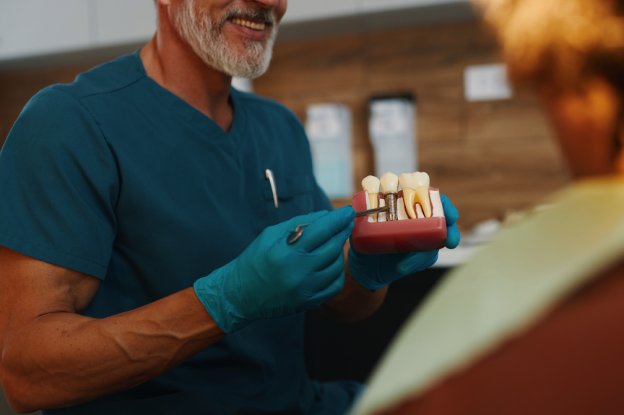
Dental implants are designed to replace missing teeth using a post placed in the jawbone that supports a restoration. Many patients choose implants because they want a tooth replacement that feels steady and helps them chew with confidence.
Experience note from our team: patients often come in thinking the choice is only about appearance, but in visits we frequently find that comfort during chewing and confidence that teeth will not move are the factors that most influence the final decision.
Dentures are removable appliances that can replace multiple missing teeth or a full arch. For many patients, dentures are a practical way to restore a smile and improve function, especially when they prefer a non-surgical option.
If you are exploring dentures in Kenilworth, NJ, the most important thing is getting a fit that supports comfort and speech, plus a plan for follow-up adjustments. Our denture service page explains partial and complete denture basics.
Some patients missing most or all teeth are not looking for a traditional removable denture. They want a more secure, full-arch solution. One approach you may hear about is All-on-4 dental implants in Kenilworth, NJ, which uses implants to support a full set of replacement teeth. Not every patient is a candidate, so it is worth discussing your anatomy, bite, and expectations during an exam.
You can learn more about implant options on our dental implants page, which also references All-on-4 as a personalized option.
If you are worried about slipping while eating or speaking, implants or implant-supported dentures can offer more security. If you are comfortable with a removable appliance and routine adjustments, dentures may be a reasonable fit.
Comfort is personal. Some patients adapt quickly to dentures, while others feel more comfortable with an implant-based solution. A consultation helps clarify what to expect in the first few weeks.
Patients who want to confidently chew foods that feel challenging with removable dentures often ask about implants. If your diet is softer and you prioritize a removable plan, dentures may still meet your goals.
Both dentures and implants can be made to look natural. Speech changes can happen briefly as you adapt. The best results usually come from a careful fit, bite planning, and follow-up adjustments.
Dentures can often be completed in fewer phases, while implant treatment may involve healing periods. Your timeline depends on your starting point (gums, bone, and any needed extractions). If you need extractions, our team may discuss options from our tooth extraction page as part of planning.
Good gum health and adequate bone are important factors for implants. Dentures also benefit from healthy tissues and a stable bite. Either way, a comprehensive exam and appropriate imaging are key. Our dental X-rays and exams page explains why that step matters.
Implants require daily brushing/flossing and routine professional care. Dentures require removal for cleaning and periodic adjustments. Ask what ongoing visits are typically recommended for your option.
These are general patterns, not rules. Your dentist will help you decide based on your health and goals.
Not always. Dental implants can offer excellent stability and chewing confidence, but dentures can be a good fit for some patients based on health, anatomy, timeline, and budget. A consultation helps match the option to your goals and oral health.
All-on-4 is a treatment approach that uses a smaller number of implants to support a full arch of teeth. Traditional implant treatment may use a different number and placement plan depending on bone and bite needs. Your dentist will recommend what is appropriate for your situation.
In many cases, yes. Some patients start with dentures and later transition to implants or implant-supported dentures. Bone and gum health, medical history, and current denture fit all affect what is possible.
Timing varies by patient. Some cases require healing time between steps, while others may move faster. Your treatment plan will outline the expected timeline based on your oral health and tooth replacement goals.
Ask what options you qualify for (implants, dentures, implant-supported dentures), expected timeline, maintenance needs, how the plan supports chewing and speech, and what happens if you need adjustments or repairs. It also helps to ask how many visits to plan for and what imaging or exams are needed.
The best tooth replacement is the one that supports your comfort, your confidence, and your long-term oral health. If you are comparing implants, dentures, or full-arch options like All-on-4, an exam is the fastest way to get clear, personalized answers.
If you are ready to explore next steps with Dr. Myung Hae Hyon and the team at Kenilworth Dental Care, we are here to help you understand your options and build a plan that fits your goals.
Call 908-272-4170 to schedule a consultation.
New to our office? Visit our New Patients page to see what to expect.



Accessibility Menu